Description
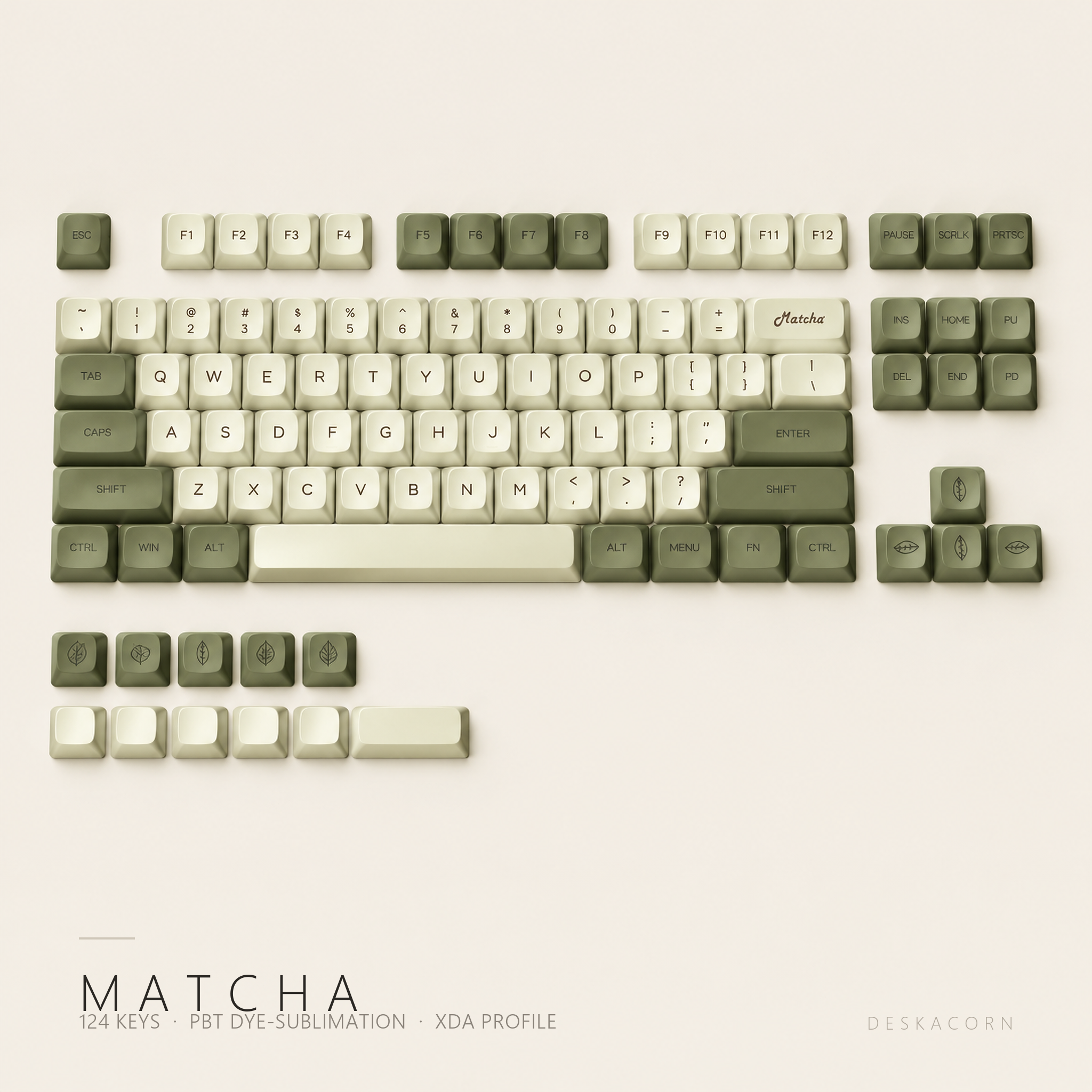
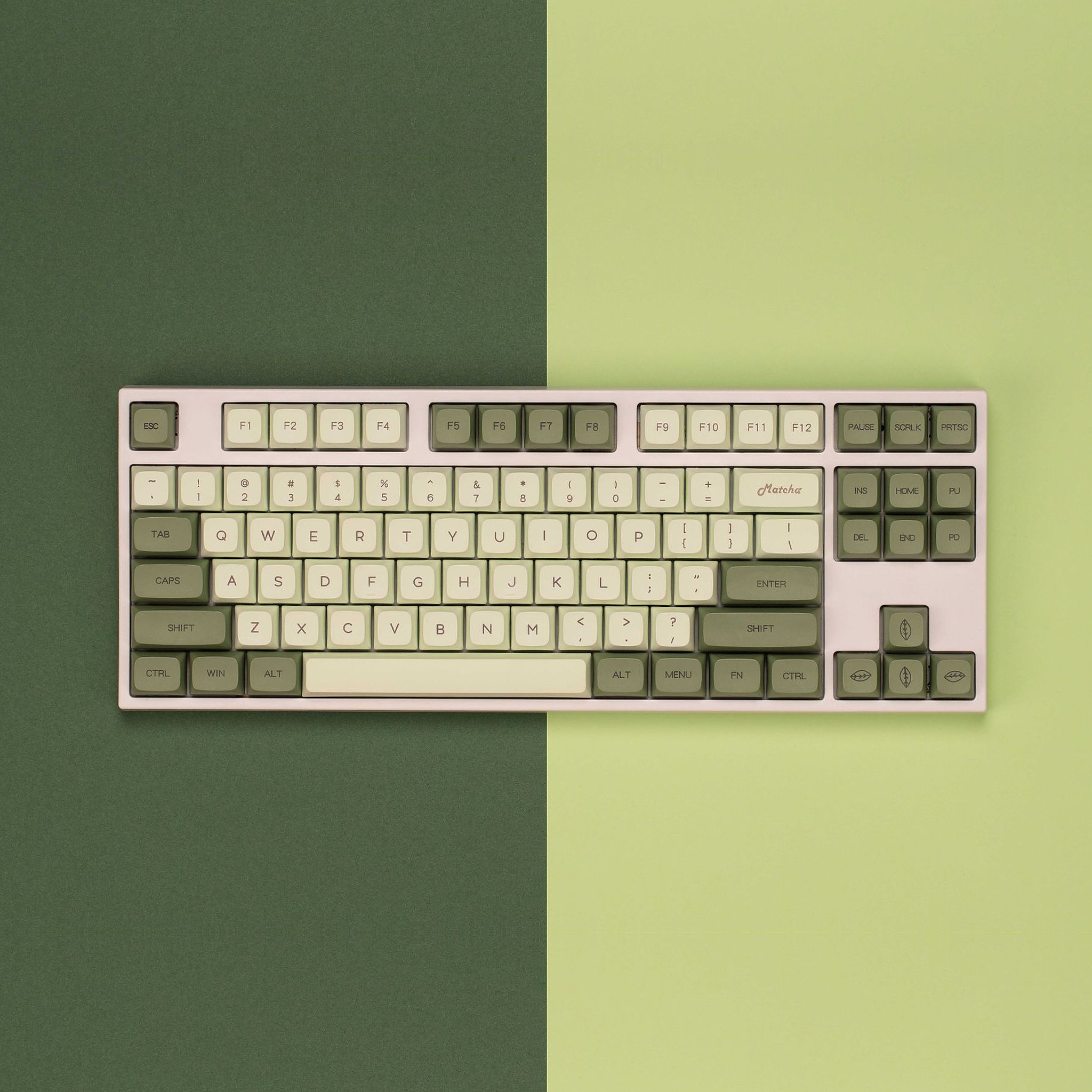
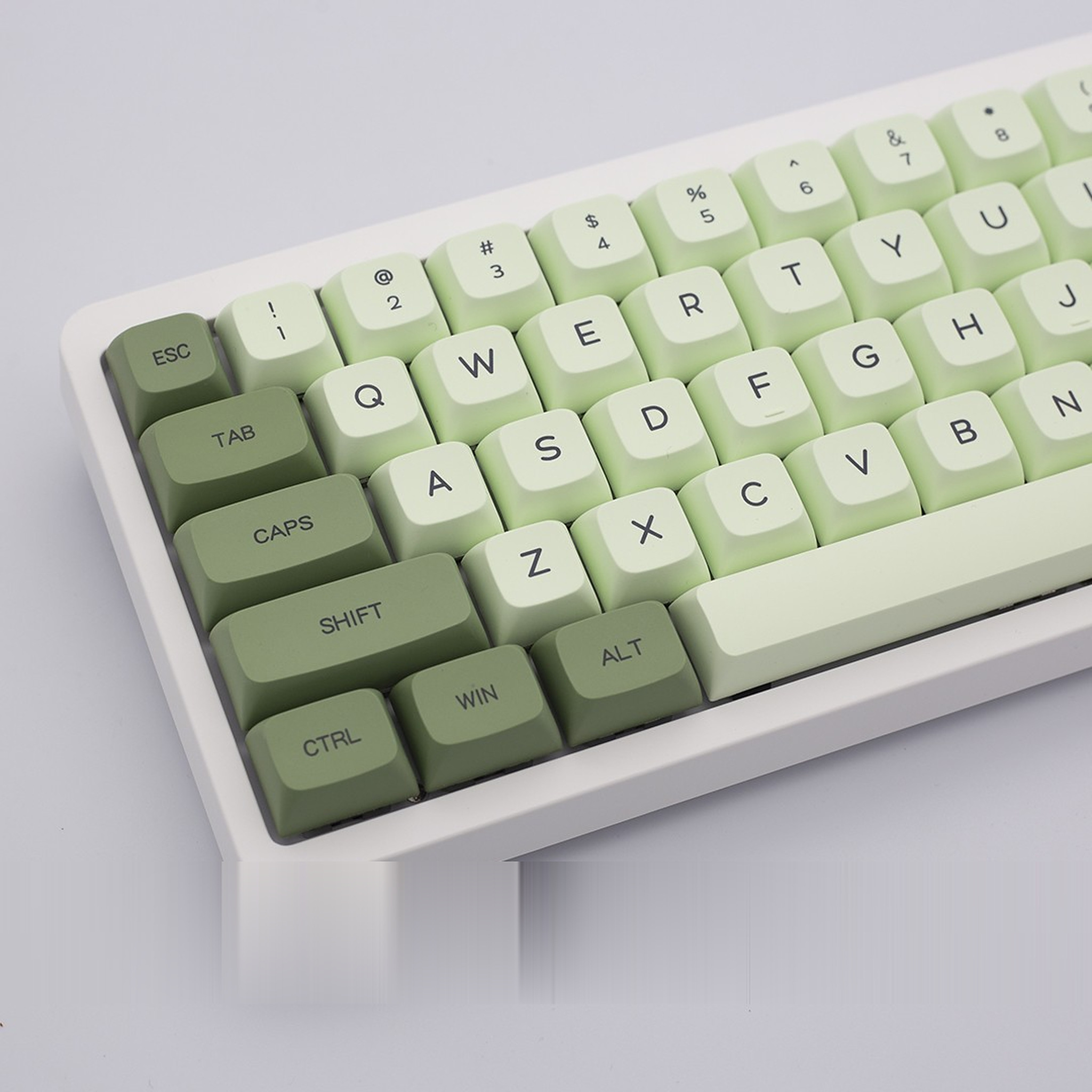
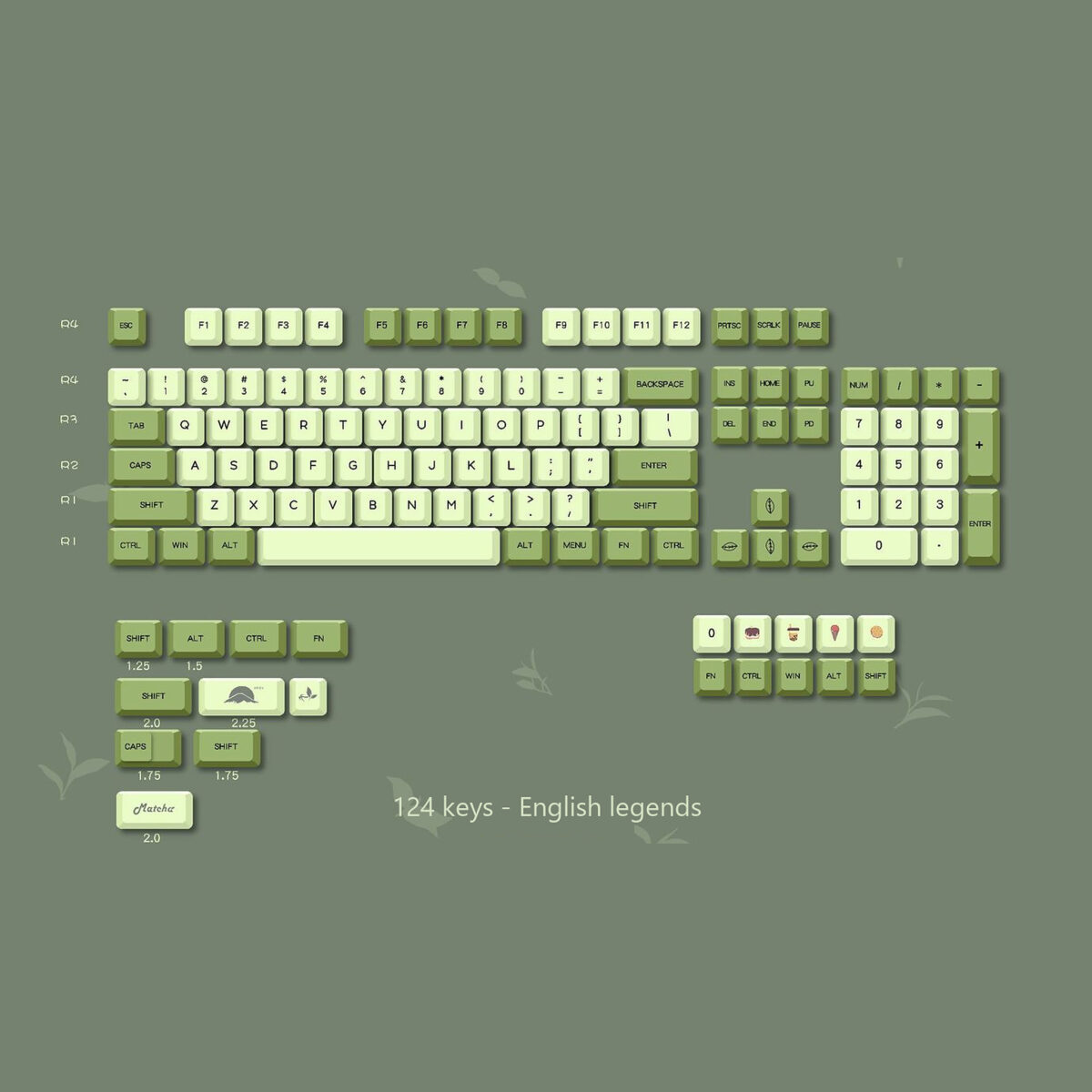
Matcha is not one green. The alphas and number row are a pale, milky pistachio; the modifiers drop two shades into a deep moss; the accent keys are cream with a scatter of small food motifs. Put the three together and the board looks grown rather than printed.
The colour
Three greens, held together by cream
The trick is that the light and dark greens never touch on the same row. Esc, Tab, Caps, Shift, Ctrl, Alt and the right-hand cluster all sit in the dark moss; everything you actually type on is pale. Your eye reads two clean blocks instead of a gradient, and the cream accent keys act as the hinge between them.
The spacebar is the light green, so the bottom row does not turn into a heavy dark bar. Number rows carry both: dark 1 through 0, then a pale minus and equals. It looks deliberate in the render and it looks deliberate on a desk.
The novelties
Small food, not a cartoon
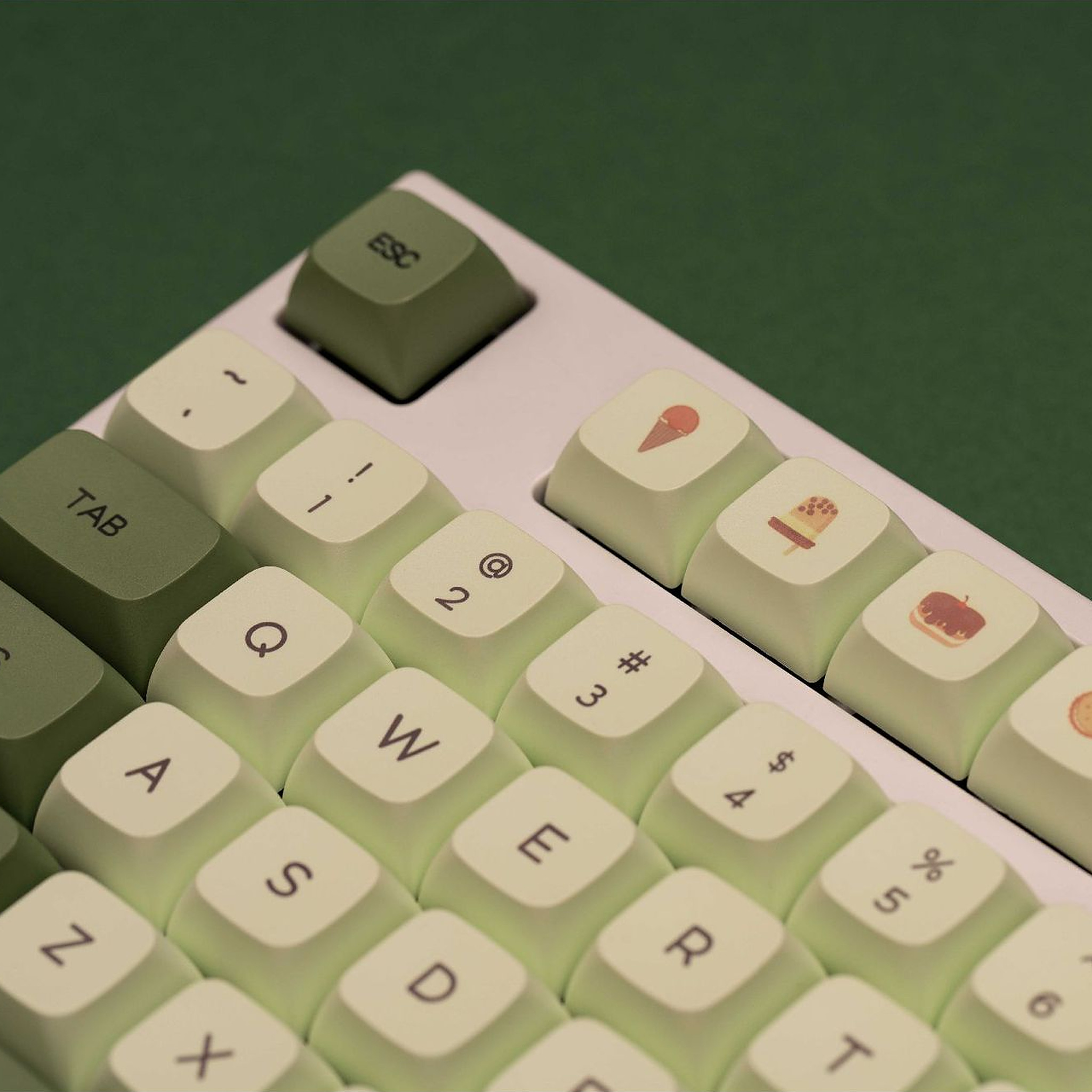
The extra keys are tiny illustrations rather than lettering: an ice-cream cone, a bubble-tea cup, a pastry, a round citrus, and leaf outlines on the arrow and navigation cluster. They are printed small on purpose. All of them are optional, so you can run a board with none of them and it still reads as a clean two-tone set.
The 2u key next to the spacebar is script-lettered “Matcha” and is the one piece of text in the whole kit.
In the set
124 keys, so the small boards are covered
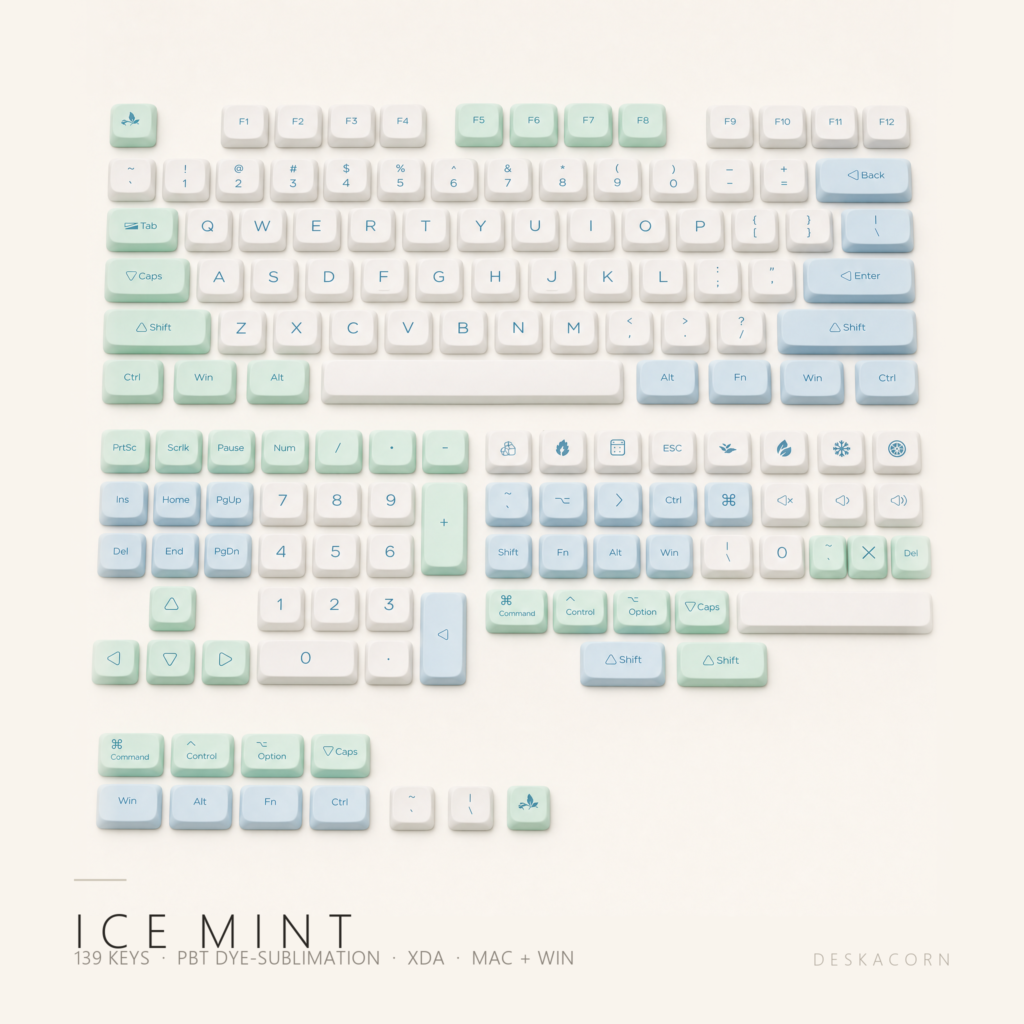
The main block is a full 104 layout with the number pad. The remaining twenty-odd keys are the ones small and unusual boards need: 1.25u, 1.5u, 1.75u and 2u bottom-row modifiers, a 2.25u Shift, the 1.75u Caps pair, and the extra navigation column.
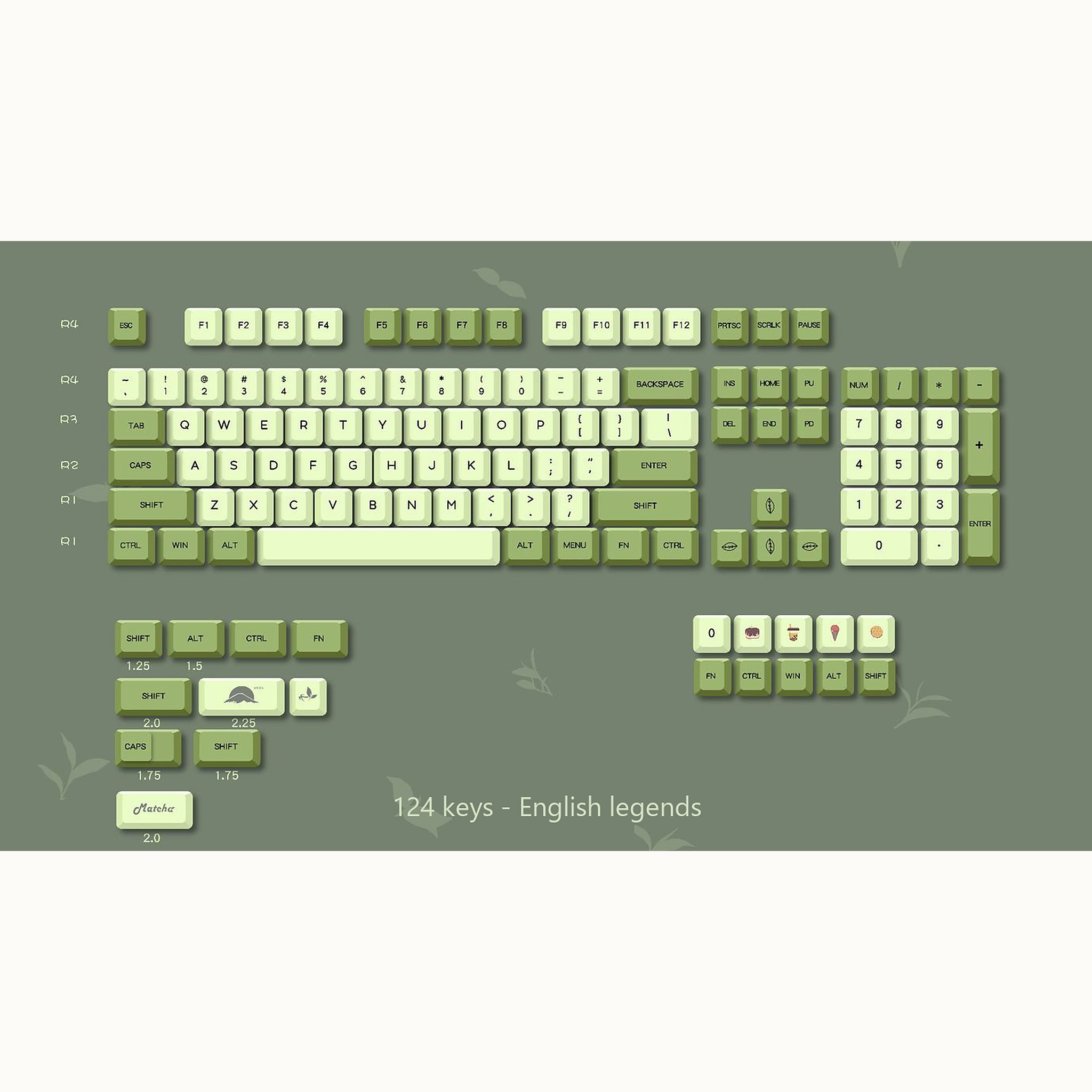
It covers 61, 64, 68, 78, 84, 87, 96, 980, 104 and 108-key boards. If you are on a split, Alice or ISO layout, message us with a photo of your board before ordering and we will tell you what is missing.
Shape
XDA: every row the same height
XDA is a uniform profile — no step from front to back, no angled rows. Every cap is the same height and the same shape, with a wide, shallowly dished top that gives your fingertip a large landing area. Boards built on XDA look flat and even from the side, and keys can be moved between rows without the surface going crooked.
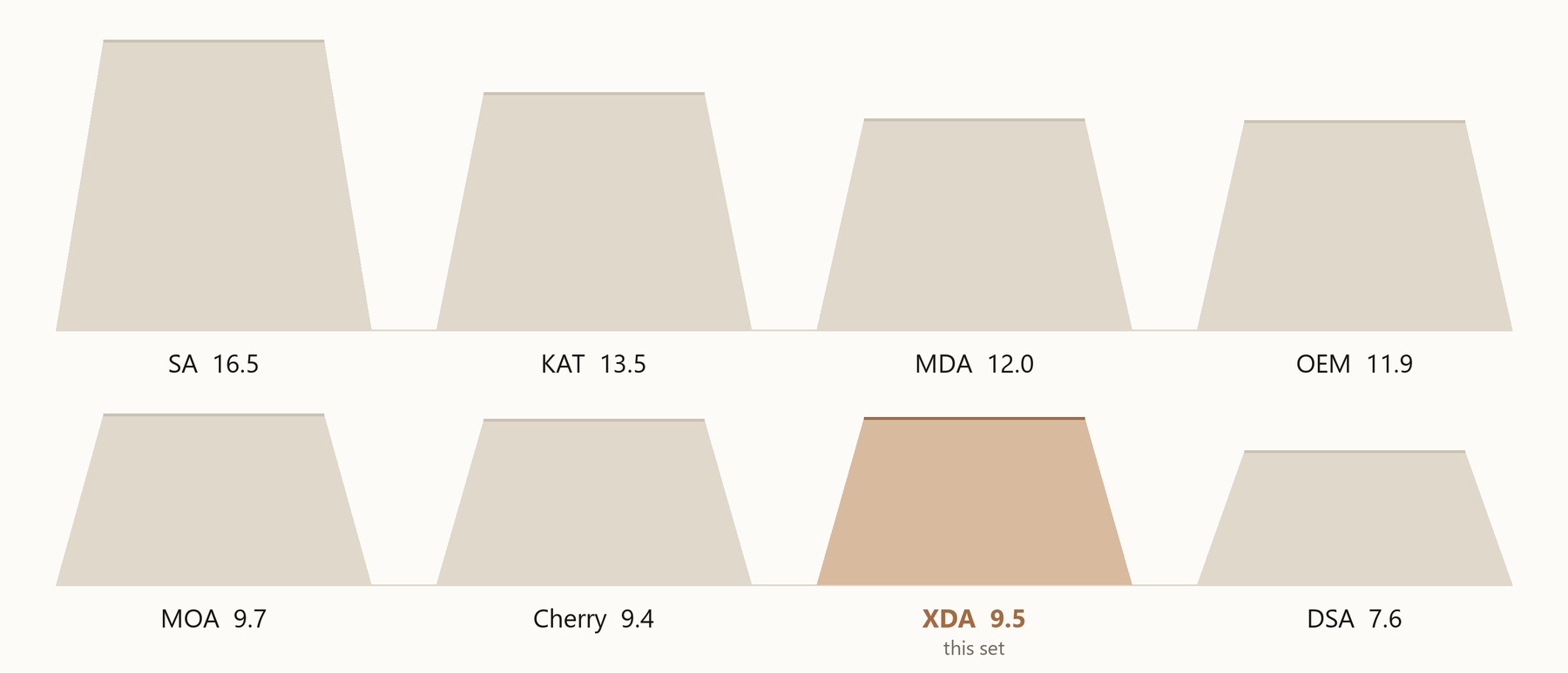
Practically: if you are used to the sculpted OEM caps that ship on most prebuilt boards, this will feel lower and flatter, and the tops will feel wider. If you already type on DSA, XDA will feel like the same idea with a little more height and a bigger dish.
Fit
What it goes on
| Board | Works? |
|---|---|
| 61, 64, 65, 68 key | Yes |
| 75, 78, 84 key | Yes |
| 87, 96, 104 key | Yes |
| 108 key | Yes, numpad included |
| Alice and split boards | Partly – check with us first |
| ISO / UK / DE layouts | No. ANSI only |
| Topre, optical, low-profile | No. MX cross stem only |
The keyboard and the props in these photos are not included. This listing is 124 keycaps.
Specifications
The numbers
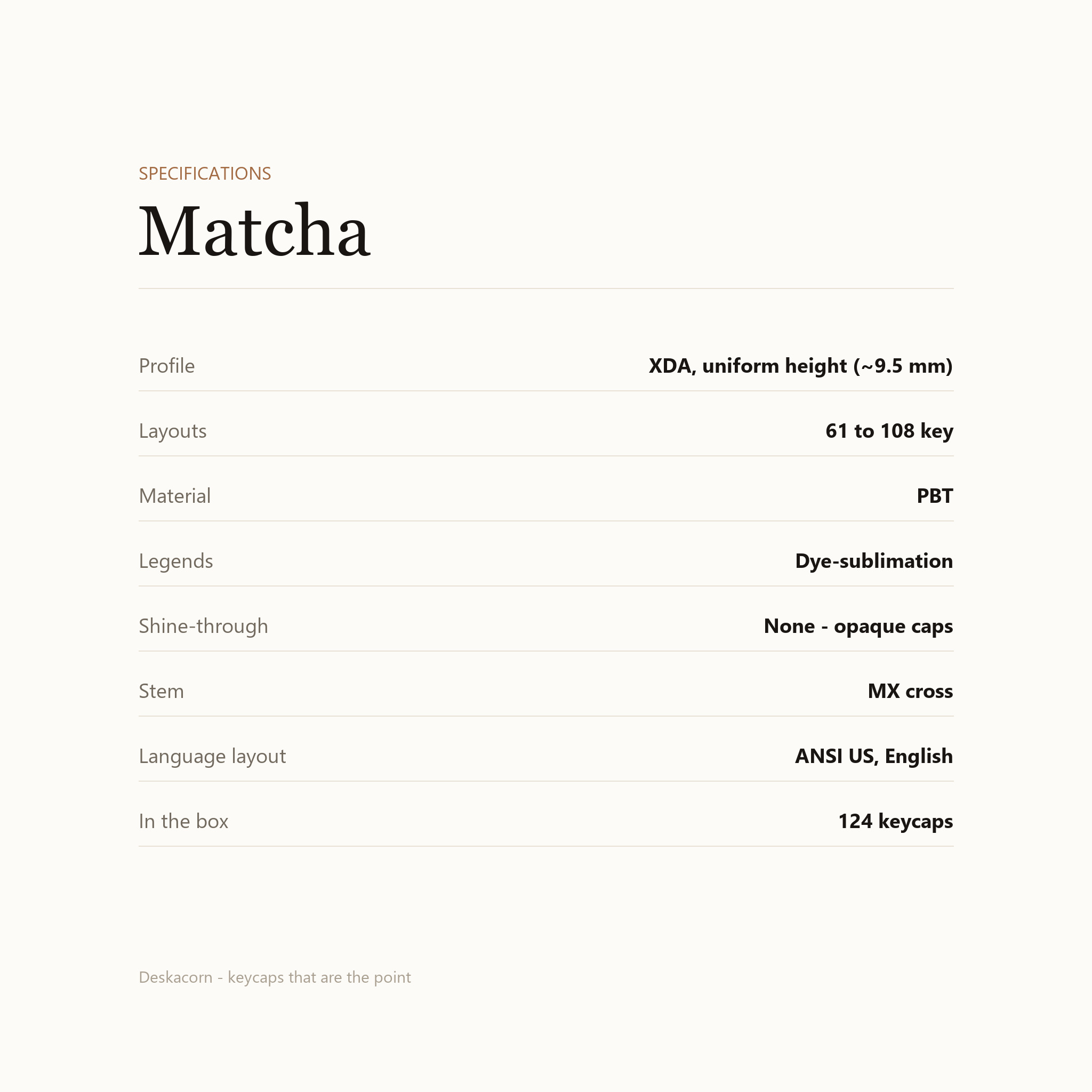
| Profile | XDA, uniform (all rows same height) |
| Key count | 124 |
| Material | PBT |
| Legend method | Dye-sublimation |
| Shine-through | None – opaque caps |
| Stem | MX cross |
| Language layout | ANSI US, English legends |
| Overall height | Approx. 9.5 mm |
| In the box | Keycaps only |
Before you order
Two things worth knowing
Dye-sublimation pushes pigment into the plastic rather than printing on top of it, so the legends do not wear off the way pad-printed or UV-printed caps do. It also sits slightly into the surface — run a fingernail across a legend and you will feel nothing, not a raised edge.
These are production caps, not collector-grade samples. A mould mark on a side wall, a faint flow line, or a hairline scratch on the base is normal for injection-moulded PBT. The lighter the colourway, the more visible it is, and pale green shows it more than black does. We would rather tell you now than argue about it later.
Pull keys straight up with a wire puller, never at an angle. Warm water and a drop of mild soap to clean; no alcohol, no acetone, no dishwasher.
Reviews
There are no reviews yet.